
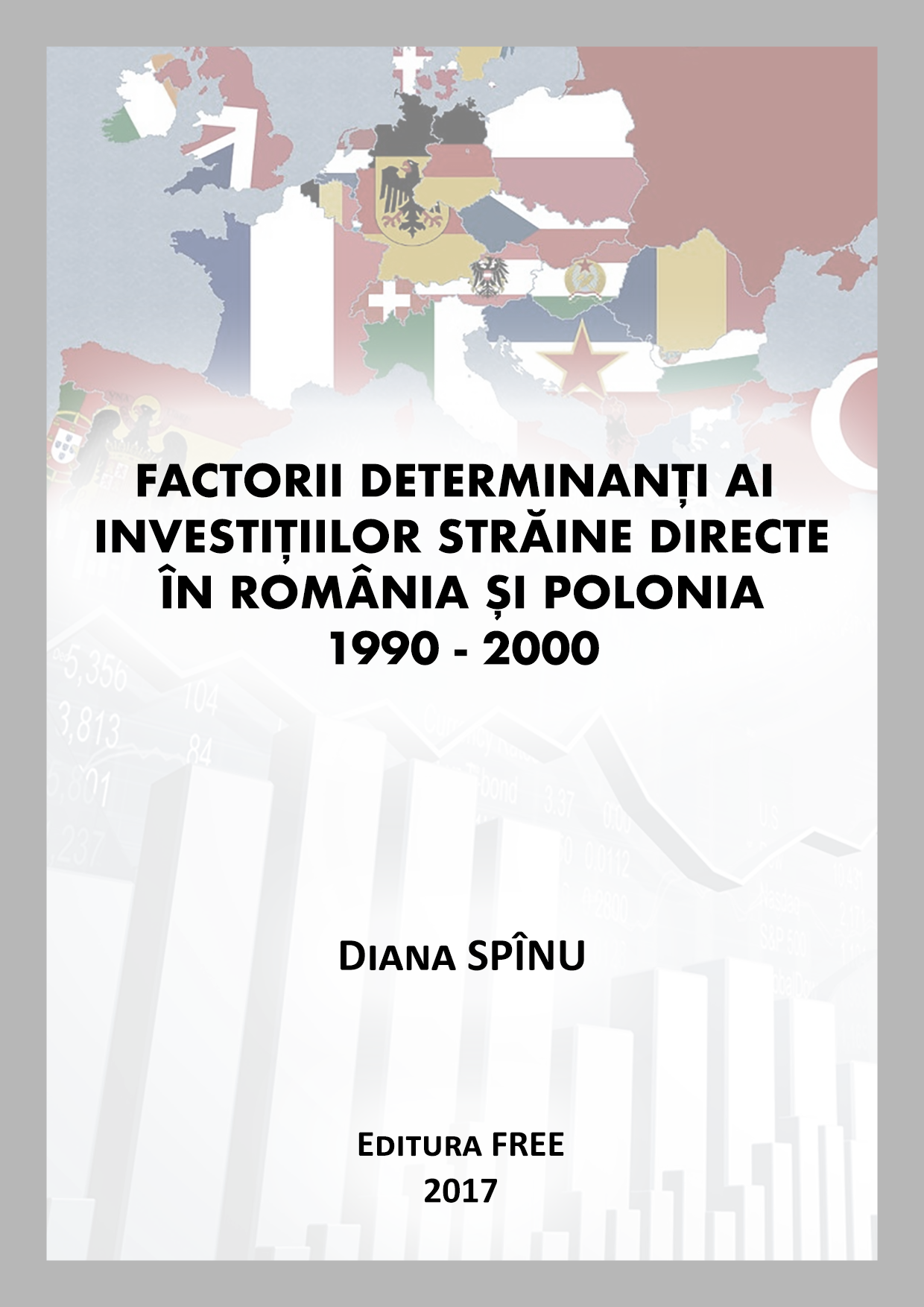
Factorii determinanți ai investițiilor străine directe în România și Polonia 1990-2000
Synopsis
Foreign direct investment is one of the principal indicators of economic performance and of integration into global financial markets. During the transition from a planned economy to a free market, foreign investment became a necessity for the countries of Central and Eastern Europe, where domestic capital was often scarce or altogether absent.
Public opinion was at first widely reluctant about foreign investment, but attention shifted quickly to the question of how foreign capital might be attracted, as its importance became increasingly clear. Although the economic potential of the Central and Eastern European states was considerable, inflows were modest by comparison with other regions, and where they did arrive they went to a narrow group of countries. The years spent under communism were the main reason for a level of investment risk high enough to keep potential investors away. Even so, the reforms governments adopted and their commitment to liberalising their economies provided the stimulus needed for foreign investment to grow in the region.
Despite those efforts, performance in attracting foreign direct investment varied widely. Poland and the Czech Republic drew large volumes of foreign capital, while in countries such as Romania the level remained far below both the economic potential and the need for modernisation. Identifying the factors behind this asymmetric development in Romania and Poland is therefore necessary to understanding the general economic performance of the two states.

More from the catalog

Growing Story
November 21, 2023
Un buget alternativ al UE
May 12, 2026

Societatea comerțului
December 25, 2021

Priorități pentru noua Comisie Europeană 2025: Energie și Mediu Înconjurător
February 20, 2025